

Jaguar Returns
Last September 23, its restored version made its Asian premiere as the opening film of the Sinag Maynila Independent Film Festival.
Abubot by Josh Van Ulric Campo
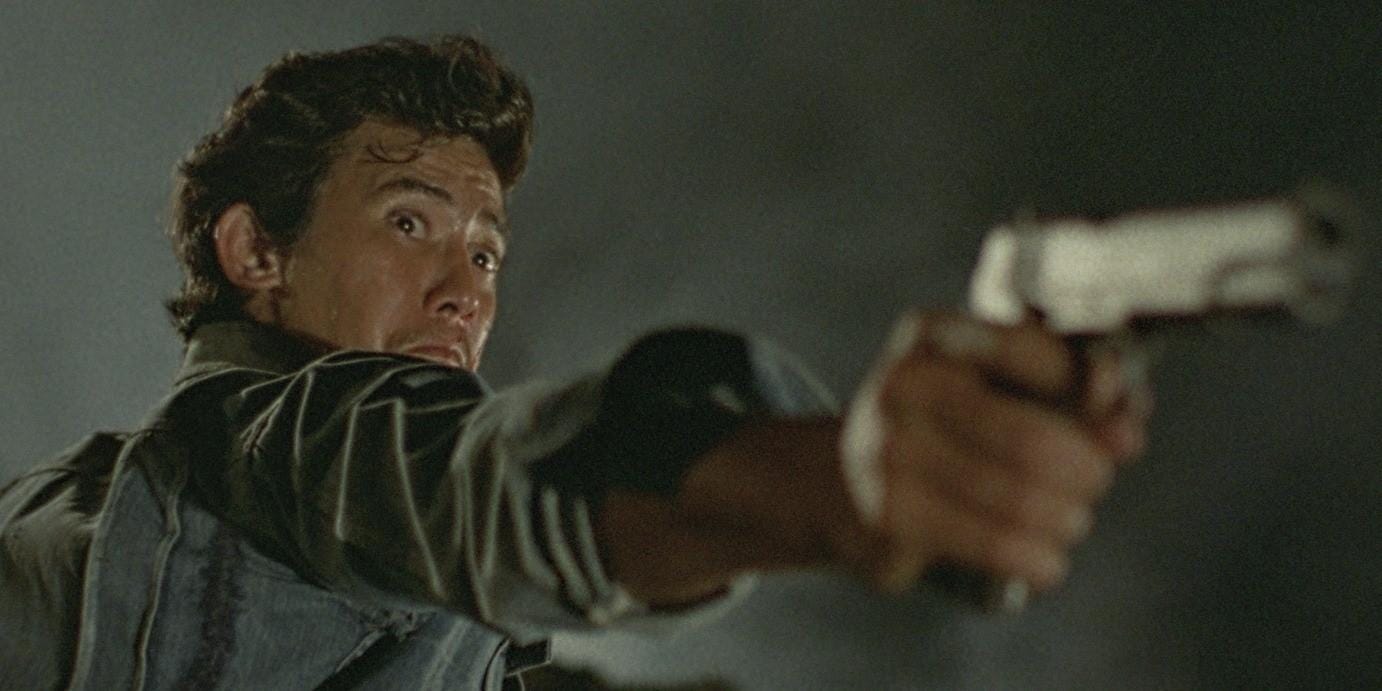
Photo: Philip Salvador as Poldo, Jaguar (1979, dir. Lino Brocka)
Hailed as the first Filipino film to compete and be nominated in the Main Competition of the 1980 Cannes Film Festival, Jaguar (1979) by Lino Brocka unfolds an explosive yet absorbing crime story about an impoverished security guard in a publishing firm named Poldo Miranda (Phillip Salvador). An adaptation of a true-to-life essay on the infamous 1960 Brown Derby shooting written by Nick Joaquin, Poldo, who is also called Jaguar (reverse slang for “guwardya” or “guard”) in the film, resides in the slums with his mother and siblings, alongside his dream of rising above his adversities.
In his duty, he looks after his boss, Sonny Gaston (Menggie Cobarrubias), who later befriends him and takes him under his wing. Somewhat a personal bodyguard, Poldo becomes part of Sonny’s gang and gets invited to join them in drinking sessions and night outs. As the story progresses, for duty and their friendship, he finds himself caught in the middle of aimless fights, hasty shootings, and running away with somebody else’s girlfriend, wherein he meets Cristy Montes (Amy Austria), a go-go dancer who aspires to become a movie star. Similar to Poldo, she also comes from the slums until she begins to appear on the covers of comic magazines, headed for a movie career in exchange for becoming Sonny’s new girl. Now, they both dream of getting ahead in life.
With Brocka’s activism and cultural struggle through his works of cinema, Jaguar portrays a complex society struggling with poverty, socioeconomic disparity, sexism, and transgressions. The third-world realities are presented realistically, to the point that the film ironically appears as a diorama of sorts, as the characters and settings, especially in the slums, feel unthinkable but real. The entirety of the film feels like a desperate escape from marginalized conditions and a stark hope that a much better state of living exists beyond risk and uncertainty.
Poldo, becoming part of the gang, despite being treated condescendingly at times and obviously being a pawn in the power struggle, treats his friendship with his boss and the boys as a glimpse into a better way of life. It is painfully undeniable that he equates his worth with how he can be of service as a security guard. But when tragedy strikes, he becomes a throwaway, just like a gun used in a crime, while his boss can easily run away with his wealth and power. As he hides in dark alleys and dashes toward the other side of a garbage mountain, his fanciful dreams of a life of ease and a sense of self-worth become a nightmare he must escape from incessantly.
Apart from Poldo, the character of Cristy and the development of her story in the film are also worth alluding to. To flee the slums, she performs seductively in a nightclub and is lusted over by wealthy men because of her body and beauty. With promises of a more desirable life and the movie career she dreams of, she comes along with Sonny, who regards her only for pleasure and sensuality. Misogyny is strikingly evident, but even in her position of inferiority, she is able to use it to become a movie star in her own right. It is a powerful declaration that women like her can survive, continually live and exist, and even assert control over their own lives.
At some parts of the film, Poldo and Cristy also find refuge in each other as they share the same background. And more than that, it can be seen as a shared survival and resistance against a corrupt system that relentlessly persists. They are both victims of a society that not only exploits them but abandons them when no longer needed.
Last September 23, its restored version made its Asian premiere as the opening film of the Sinag Maynila Independent Film Festival. Jaguar returns, and after over forty years since its initial premiere, its claws still slash deep. More than just a restoration, it is a reintroduction to, unarguably, one of the most essential films in the country.